What astaxanthin is
Astaxanthin belongs to the same carotenoid family as lutein and zeaxanthin. It’s made by the microalga Haematococcus pluvialis and moves up the food chain into krill, shrimp, salmon and trout. Its structure lets it sit across cell membranes, which helps explain why researchers describe it as one of the most potent natural antioxidants (PMC review).
Why researchers study it for eyes
The eye is exposed to light and oxygen all day, which creates oxidative stress. The ciliary muscle, which changes focus between near and far, works hard during close screen work. Astaxanthin has been studied for both: antioxidant protection and focusing comfort.
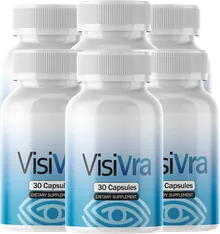
Best Visivra price today: 6 bottles at $49 each (save $780) or 3 bottles at $69 each with free US shipping. One-time payment, no autoship, 60 days to decide.
Check Today’s Discount ›What the human studies show
| Study focus | Who | Finding |
|---|---|---|
| Astaxanthin + anthocyanins + lutein (PubMed) | Adults with heavy eye use | Better eye-function and fatigue scores vs placebo |
| Antioxidant review (PMC) | Lab and human studies | Strong antioxidant and anti-inflammatory activity |
| Plant compounds and eye strain (PubMed) | Review | Studied for light-induced retinal stress and asthenopia (eye strain) |
The evidence is encouraging but smaller than for lutein and zeaxanthin, and many trials are short or test combinations. That’s why astaxanthin works best as a supporting ingredient rather than the whole formula.
How much astaxanthin for eyes?
Eye-fatigue studies have commonly used around 4–12 mg a day for 4 weeks or longer. There’s no official upper limit. Take it with a meal containing fat, since it’s fat-soluble like lutein.
Food sources
- Wild salmon (the richest common food; farmed salmon gets it from feed)
- Trout, red seabream
- Shrimp, krill, crayfish and lobster
A typical serving of salmon gives only a few milligrams at most, so most people don’t reach study amounts from food alone.
Safety
Astaxanthin is generally well tolerated. Reported effects are mild: reddish stool color at higher doses or slight stomach discomfort. People with shellfish allergies should check whether a product uses algae or crustacean sources. Full details in astaxanthin side effects.
Astaxanthin vs lutein: do you need both?
| Lutein + zeaxanthin | Astaxanthin | |
|---|---|---|
| Where it works | Concentrates in the macula as macular pigment | Antioxidant throughout tissues |
| Main eye research | AREDS2; screen-time strain (JAMA) | Eye fatigue, focusing |
| Evidence strength | Stronger | Promising, smaller |
They complement each other, which is why combination formulas pair them. See lutein and zeaxanthin together.
Natural vs synthetic astaxanthin
Most research-grade supplements use natural astaxanthin from Haematococcus pluvialis algae. Synthetic astaxanthin is made for fish feed and some supplements and has a different mix of isomers. If you want the form used in most human studies, look for natural algae-derived astaxanthin (PMC review). If the label doesn’t say, ask the seller.
How to take it
- With a meal containing fat.
- At a consistent time each day.
- For at least four weeks before judging, and ideally eight to twelve.
Other research areas
Astaxanthin is also studied for skin, exercise recovery and joint comfort. Those studies are separate from eye research, so don’t assume results carry over. For eyes, the most relevant human data are in screen workers and heavy eye users (PubMed; PubMed).
Who should check first
- People with shellfish allergies: confirm the source.
- People on blood pressure medicines: astaxanthin may lower blood pressure slightly, so mention it.
- Pregnant and breastfeeding women: data are limited, so ask your doctor.
For the full safety picture, see astaxanthin side effects and Visivra side effects.
Choosing an astaxanthin eye supplement
- Pair it with lutein and zeaxanthin.
- Prefer natural algae-derived astaxanthin, the form most studies used.
- Check the source if you have a shellfish allergy.
- Look for one-time payment and a money-back guarantee.
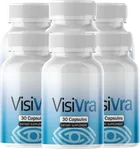
Visivra includes astaxanthin alongside lutein, zeaxanthin and bilberry, the same combination tested in the placebo-controlled study above. See Visivra’s formula and price.
FAQ
Is astaxanthin good for your eyes?
Studies link it to less eye fatigue and better focusing comfort, especially in combination with lutein and anthocyanins.
How long does astaxanthin take to work for eyes?
Most studies ran at least 4 weeks; give it 1–3 months.
Is astaxanthin better than lutein?
They do different jobs. Lutein builds macular pigment and has stronger evidence; astaxanthin is a supporting antioxidant.
Can I get enough astaxanthin from salmon?
Usually not the amounts used in eye studies, though salmon is good for eyes for its omega-3s too.
Sources
- PubMed Central (NIH): Astaxanthin as a king of ketocarotenoids, antioxidant properties review (Mar Drugs, 2023)
- PubMed: Anthocyanin, astaxanthin and lutein on eye functions, a randomized placebo-controlled study (J Clin Biochem Nutr, 2021)
- PubMed: Plant bioactive compounds, light-induced retinal damage and asthenopia (Nutr Res, 2023)
- PubMed: Lutein + zeaxanthin and omega-3 fatty acids for AMD, the AREDS2 randomized trial (JAMA, 2013)
General information, not medical advice. Prices and product details come from the official Visivra order page and bottle, checked November 6, 2026; the checkout page and the label on your bottle take priority. Read our disclaimer.