The short list
| Nutrient | Why computer users care | Evidence |
|---|---|---|
| Lutein + zeaxanthin | Less eye strain and fatigue, better visual performance | 6-month trial |
| Bilberry | Focusing-muscle findings in screen workers | 12-week trial |
| Astaxanthin | Eye-function scores with anthocyanin + lutein | randomized trial |
| Vitamin A | Healthy eye surface; low-light vision | NIH ODS |
| Zinc | Moves vitamin A to the retina | NIH ODS |
| Omega-3 (from fish) | Good general nutrition; fish oil capsules were no better than placebo for dry eye | NEI |
How to choose a formula
- Lutein and zeaxanthin should be front and center.
- One capsule a day is easier to stick with.
- No hidden subscription; a real money-back guarantee.
- Avoid stacking extra vitamin A and zinc beyond NIH limits.
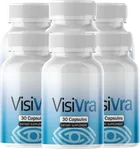
Visivra ticks those boxes; see the Visivra eye supplement and eye supplements that actually work.
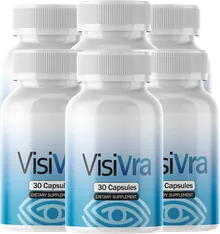
Best Visivra price today: 6 bottles at $49 each (save $780) or 3 bottles at $69 each with free US shipping. One-time payment, no autoship, 60 days to decide.
Check Today’s Discount ›How much screen time is “a lot”?
Many office workers spend seven or more hours a day on a computer, then add phone and TV time in the evening. Studies on eye nutrients and screens have focused on people with heavy daily use: the 2017 carotenoid trial recruited young adults with high screen exposure (PubMed), and the bilberry trial studied workers at visual display terminals (PubMed). If that sounds like your day, you are the kind of person this research applies to.
Food first: an eye-friendly workday menu
| Meal | Example | Eye nutrients |
|---|---|---|
| Breakfast | Spinach omelet with olive oil | Lutein, zeaxanthin, vitamin A |
| Snack | Blueberries and a few almonds | Anthocyanins, vitamin E |
| Lunch | Kale salad with salmon | Lutein, omega-3 |
| Snack | Orange pepper strips and hummus | Zeaxanthin, vitamin C |
| Dinner | Lean beef or beans with broccoli | Zinc, lutein |
Most people don’t eat like this every day, which is where a supplement helps fill gaps (NIH ODS).
Label checklist when choosing an eye vitamin
- Lutein and zeaxanthin listed by name.
- Other ingredients with human research, such as bilberry or astaxanthin.
- Vitamin A and zinc at amounts that keep your total within NIH limits (NIH ODS; NIH ODS).
- A clear daily serving, ideally one capsule.
- Clear seller information: contact details, returns address, refund policy.
- No disease claims or “FDA approved” badges (FDA).
The habits that matter as much as vitamins
- 20-20-20: every 20 minutes, look 20 feet away for 20 seconds (CDC).
- Blink on purpose during breaks.
- Adjust brightness to match the room, and reduce glare.
- Get computer glasses if you are over 40 and switching between distances strains your eyes.
- Sleep 7–9 hours.
Our pick for one-capsule convenience
If you want lutein, zeaxanthin, bilberry, astaxanthin, zinc and vitamin A in one daily capsule with a 60-day guarantee, Visivra fits that brief. Compare alternatives in Visivra vs plain lutein and Visivra vs a multivitamin.
Reader questions
Do I need eye vitamins if I wear blue-light glasses?
They do different things. Glasses filter light while worn; nutrients like lutein and zeaxanthin support the macula from inside (PubMed). Many screen workers use both.
Can eye vitamins replace screen breaks?
No. Breaks and blinking are still the most direct fix for strain (CDC).
How soon should I see a difference?
Most studies ran 12 weeks or longer (PubMed). Give any eye vitamin about three months.
What about vitamin C and E?
They are antioxidants included in AREDS2 at high doses for AMD (NEI). For everyday screen use, most people get enough vitamin C from food.
Are eye vitamins safe for long-term use?
At label doses and within NIH limits for vitamin A and zinc, the common eye nutrients have good safety records. Review your supplements with your doctor once a year.
A sample screen worker’s eye routine
Here is how one day might look. At breakfast, take your eye supplement with eggs or yogurt. When you sit down at your desk, set a recurring 20-minute reminder; each time it goes off, look out of a window for 20 seconds and blink fully a few times. At lunch, step outside, which gives your eyes distant targets and natural light. In the afternoon, when eyes feel driest, use preservative-free drops if needed. In the evening, switch devices to night mode and avoid scrolling in bed. Over a few weeks, these habits plus daily nutrients make a noticeable difference for many people. Track your end-of-day eye comfort score and review it after 8–12 weeks (PubMed).
In short
For computer users, the best-supported eye nutrients are lutein and zeaxanthin, with bilberry and astaxanthin as useful additions, plus vitamin A and zinc. Combine them with screen habits, and give them about three months.
One more reader question
Do I need different vitamins for a laptop versus a phone?
No. The eye demands are similar: close focus, less blinking and screen glare. Phones are held closer, which increases focusing effort, so breaks and holding the phone a bit further away help. The same nutrients apply to all screens: lutein and zeaxanthin for macular pigment, bilberry and astaxanthin for antioxidant support, and vitamin A and zinc for the eye surface and low-light vision (NIH ODS). Night mode in the evening and enough sleep complete the picture.
Vitamins don’t replace breaks
The 20-20-20 rule and blinking are still the first line (CDC). See tired eyes remedies.
Get all six eye nutrients in Visivra
FAQ
What vitamin is best for screen eye strain?
Lutein and zeaxanthin have the most direct research in high-screen-time adults.
Is bilberry good for computer users?
A 12-week trial in display workers found better focusing-muscle findings than placebo.
Do I need omega-3 too?
Oily fish is good general advice, but fish oil capsules were no better than placebo for dry eye in the large NIH-funded DREAM trial. Ask your eye doctor before adding one.
Sources
- PubMed: Macular carotenoid supplementation improves visual performance, sleep quality and physical symptoms in people with high screen time (Foods, 2017)
- PubMed: 12 weeks of bilberry extract and ciliary-muscle findings in visual display terminal workers (Nutrients, 2020)
- PubMed: Anthocyanin, astaxanthin and lutein on eye functions, a randomized placebo-controlled study (J Clin Biochem Nutr, 2021)
- NIH Office of Dietary Supplements: Vitamin A and carotenoids
- NIH Office of Dietary Supplements: Zinc
- National Eye Institute (NIH): Omega-3s from fish oil supplements no better than placebo for dry eye (DREAM trial, 2018)
- NIH Office of Dietary Supplements: Dietary supplements, what you need to know
- FDA: Dietary supplements
- CDC: Preventing vision loss
- PubMed: Antioxidant supplementation, macular pigment optical density and visual function, a network meta-analysis (Adv Nutr, 2024)
- National Eye Institute (NIH): AREDS/AREDS2 clinical trials
General information, not medical advice. Prices and product details come from the official Visivra order page and bottle, checked November 6, 2026; the checkout page and the label on your bottle take priority. Read our disclaimer.