Why this question never goes away
Search for ways to improve eyesight and you’ll find palming, eye yoga, pinhole glasses, “natural vision” courses and phone apps that promise you can ditch your reading glasses. The pitch is appealing: eyes are muscles, muscles get stronger with training, so train them. The problem is that the part of your eye that decides how sharp things look isn’t mostly a muscle problem. It’s shape and optics.
What the American Academy of Ophthalmology actually says
The Academy’s patient page is blunt: there’s still no proof that eye exercises improve vision, and the apps that claim to help adults get rid of reading glasses are scientifically unproven. One of its ophthalmologists is quoted saying there is no evidence that any eye exercise program will reduce or eliminate the need for glasses (AAO).
| What people hope to fix | Do exercises help? | Why |
|---|---|---|
| Nearsightedness, farsightedness, astigmatism | No | These come from the shape of the eye; they’re corrected with lenses or surgery (NEI) |
| Reading blur after 40 | No | Presbyopia is the lens stiffening with age; reading glasses are the standard fix (NEI) |
| Learning difficulties in children | No evidence | The Academy and other groups said in 2014 that vision therapy claims for this can’t be substantiated (AAO) |
| Convergence insufficiency | Yes | The one condition where supervised exercises are a recognised treatment |
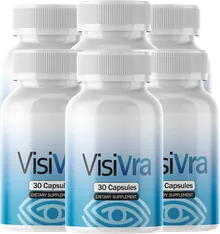
Best Visivra price today: 6 bottles at $49 each (save $780) or 3 bottles at $69 each with free US shipping. One-time payment, no autoship, 60 days to decide.
Check Today’s Discount ›The exception that proves the rule
Convergence insufficiency is when your two eyes struggle to work together on near objects, which makes reading tiring. According to the Academy, vision therapy can improve the eyes’ ability to turn inward together, and treatment may include “pencil pushups” or focusing exercises on a computer (AAO). Notice what that is: a specific diagnosis, made by an eye doctor, with a specific treatment plan. It isn’t a general “strengthen your eyes” routine, and it isn’t something to start on your own because your eyes feel tired.
What does help when your eyes feel worn out
The same Academy page on screens makes a point that surprises people: we normally blink about 15 times a minute, but only 5 to 7 times a minute when using a computer or phone (AAO). That alone explains a lot of the gritty, achy feeling at the end of a workday. So the useful “exercises” are boring ones:
- Blink on purpose. A sticky note on the monitor works better than you’d think.
- Look far away now and then. The 20-20-20 habit (every 20 minutes, something 20 feet away for 20 seconds) is recommended by the National Eye Institute (NEI).
- Use artificial tears if your eyes feel dry, and a humidifier if your room is very dry.
- Get the glasses prescription right. Uncorrected vision is a common cause of strain.
We go through the whole routine in tired eyes remedies and how to set up your monitor.
A fair word about “eye yoga”
Rolling your eyes around or palming them while you breathe probably does no harm, and it forces a break, which is the useful part. If it makes your day better, keep doing it. Just don’t expect it to change your prescription, and don’t let it replace an eye exam if your vision is slipping. See how to improve eyesight naturally for what is realistic.
How to judge any eye-training product
Before you pay for a course, an app or a gadget that promises better vision, run it through five quick questions:
- Does it promise you can stop wearing glasses? The Academy says no eye exercise program has been shown to do that (AAO).
- Can you find a controlled study, not just before-and-after photos or testimonials?
- Does it need a subscription, or lock the full method behind several upsells?
- Does it tell you to ignore your eye doctor?
- Is the person selling it an ophthalmologist or optometrist willing to put their name and license number on the claims?
If you answer yes to the first, third or fourth, close the tab. Saving the money for an up-to-date prescription will do more for how clearly you see.
Signs it’s worth asking about convergence insufficiency
Because it’s the one condition where exercises have a role, it’s worth knowing the pattern: reading becomes tiring, words seem to swim or double up close, and you lose your place easily, even though distance vision is fine. The Academy describes it as the eyes not working together on near objects, which makes reading difficult (AAO). Mention it to an eye doctor, who can test for it and, if it’s the cause, set up a supervised program. Don’t diagnose it from an app.
Questions readers ask
Is palming harmful?
Resting your closed eyes against your warm palms is harmless and can feel relaxing. The benefit is the pause, not any change to your eyesight.
Can exercises slow the need for stronger reading glasses?
No evidence says so. According to the ophthalmologist quoted by the Academy, you’ll need a higher and higher power of reading glasses as you age whatever you do (AAO).
What about exercises for children?
The Academy and other groups said in 2014 that the evidence doesn’t support vision therapy as a treatment for learning disabilities (AAO). If a child struggles with reading, start with a complete eye exam.
Where nutrition fits
Nutrition is a different kind of help from exercise. Lutein and zeaxanthin raised macular pigment and reduced strain symptoms in a trial of heavy screen users (PubMed), which is why they turn up in eye formulas. That is support for how your eyes handle long days, not a way to remove glasses. If you’re curious, best eye vitamins for computer users explains what has been studied, and Visivra is the formula this site covers (we earn a commission if you order through our link).
FAQ
Can eye exercises fix nearsightedness?
No. Nearsightedness comes from the shape of the eye and is corrected with glasses, contacts or surgery.
Do eye exercises help presbyopia?
No evidence says so. The AAO notes that most adults will need stronger reading glasses over time regardless of what they do.
Is there any eye problem exercises really treat?
Convergence insufficiency, a problem with the eyes working together up close. It is diagnosed and treated by an eye doctor.
Are eye-training apps worth paying for?
The Academy describes apps that promise to remove reading glasses as scientifically unproven, so we would not pay for one.
Sources
- American Academy of Ophthalmology: Vision training not proven to make vision sharper
- National Eye Institute (NIH): Refractive errors
- National Eye Institute (NIH): Presbyopia
- American Academy of Ophthalmology: Computers, digital devices and eye strain
- National Eye Institute (NIH): Keep your eyes healthy
- PubMed: Macular carotenoid supplementation improves visual performance, sleep quality and physical symptoms in people with high screen time (Foods, 2017)
General information, not medical advice. Prices and product details come from the official Visivra order page and bottle, checked November 6, 2026; the checkout page and the label on your bottle take priority. Read our disclaimer.