Start by deciding what “improve” means to you
When people ask how to improve eyesight, they usually mean one of four different things, and the honest answer is different for each.
| What you actually want | What can help | What won’t |
|---|---|---|
| See clearly without glasses | Contacts or refractive surgery, discussed with an eye doctor (NEI) | Exercises, apps, pinhole glasses (AAO) |
| Less eye tiredness on screens | Blinking, breaks, setup, correct glasses (AAO) | Blue-light glasses (AAO) |
| Keep the vision you have | Exams, sunglasses, not smoking, a good diet (NEI) | Anything promising a “cure” |
| Better low-light and glare comfort | Fixing dryness; checking for cataract; nutrition support | Overnight miracles |
1. Get an accurate prescription
It sounds like cheating, but for the question “how can I see better?” the best natural-feeling fix is a correct pair of glasses. Many people who think they have “weak eyes” are simply under-corrected. And at around 40 almost everyone starts to need reading help, whatever they eat or do (NEI).
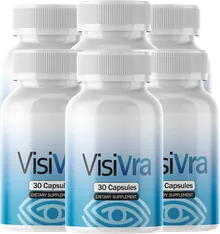
Best Visivra price today: 6 bottles at $49 each (save $780) or 3 bottles at $69 each with free US shipping. One-time payment, no autoship, 60 days to decide.
Check Today’s Discount ›2. Book the exam, even if you see fine
Some of the conditions that take away vision, like glaucoma and early macular degeneration, don’t cause symptoms at first. A dilated exam is the only way to catch them early, when treatment works best (NEI). How often depends on your age and risk; we lay it out in how often to get an eye exam.
3. Protect your eyes from damage
- Sunglasses that block 99–100% of UVA and UVB (NEI). More in sunglasses for eye protection.
- Quit smoking. It raises the risk of macular degeneration and cataracts (NEI).
- Safety glasses for power tools and certain sports.
4. Eat like you care about your eyes
The National Eye Institute points to leafy greens such as spinach, kale and collards, and to oily fish, as eye-friendly foods (NEI). Our foods for eyesight guide has easy ways to do it. Be realistic about the result: this protects the eyes you have over decades, it doesn’t sharpen them next week.
5. Treat the screen like a workplace
Looking at screens doesn’t damage your eyes permanently, but it does make them uncomfortable if you blink less and stare for hours (AAO). Breaks, a good setup and the right glasses fix most of it. See do screens damage your eyes?.
6. Consider nutrition as support, not a fix
In studies, lutein and zeaxanthin raised macular pigment and improved visual performance and strain symptoms in heavy screen users (PubMed). Beyond that, the strongest supplement evidence is narrow: certain vitamin and mineral formulas for people who already have intermediate AMD (NCCIH). If your diet is short on greens and you want daily support, a formula like Visivra is one option (affiliate link; we may earn a commission), but read how to choose an eye supplement first.
A realistic 30-day plan
| Week | Focus | Do this |
|---|---|---|
| 1 | Find out where you stand | Book an eye exam if you’re due; write down any symptoms and what you take (NEI) |
| 2 | Fix screen habits | Set up the monitor, add a blink reminder and use 20-20-20 breaks (monitor setup) |
| 3 | Protect | Buy UV-blocking sunglasses; stop smoking or call 1-800-QUIT-NOW if you smoke |
| 4 | Eat for it | Greens with olive oil four days a week, fish twice, eggs or nuts as snacks (food ideas) |
At the end of the month, notice what changed: do your eyes feel less tired in the evening? Are you sleeping better? Those are realistic wins. A different glasses prescription is not something this plan can deliver, and that’s fine.
Common mistakes
- Treating a symptom with a supplement when it needs a prescription or a diagnosis.
- Skipping exams because vision “seems fine.”
- Buying blue-light glasses instead of fixing setup and breaks (AAO).
- Believing cure claims for AMD, glaucoma or cataracts.
- Expecting results in a week from nutrition that works over months.
What to ignore
- Programs that promise 20/20 vision “without glasses or surgery.”
- Claims that a supplement dissolves cataracts or reverses macular degeneration (can you reverse vision loss naturally?).
- Any advice to stop prescribed eye drops.
Sudden vision loss, flashes or a shadow over your vision are emergencies, not projects for home remedies.
FAQ
Can you improve eyesight naturally?
You can protect your eyes and ease strain naturally, but you can’t remove a glasses prescription with habits or supplements.
What vitamins improve eyesight?
Vitamin A is essential for vision but most US adults get enough from food. Lutein and zeaxanthin have research for macular pigment and screen strain.
Do carrots improve eyesight?
Only if you are short of vitamin A, which is rare in the US. See our carrot guide for the details.
How long does it take to see an improvement from healthy habits?
Comfort changes like less strain can show in days or weeks. Long-term protection is measured in years.
Sources
- National Eye Institute (NIH): Refractive errors
- American Academy of Ophthalmology: Vision training not proven to make vision sharper
- American Academy of Ophthalmology: Computers, digital devices and eye strain
- American Academy of Ophthalmology: Should you be worried about blue light?
- National Eye Institute (NIH): Keep your eyes healthy
- National Eye Institute (NIH): Presbyopia
- National Eye Institute (NIH): Get a dilated eye exam
- National Eye Institute (NIH): Cataracts
- PubMed: Macular carotenoid supplementation improves visual performance, sleep quality and physical symptoms in people with high screen time (Foods, 2017)
- NCCIH (NIH): Things to know about dietary supplements for eye conditions
General information, not medical advice. Prices and product details come from the official Visivra order page and bottle, checked November 6, 2026; the checkout page and the label on your bottle take priority. Read our disclaimer.