Why this is the cheapest eye insurance there is
We spend a lot of time on supplements on this site, so let’s be clear: a decent pair of sunglasses probably protects your eyes more than any capsule. The National Eye Institute recommends sunglasses that block 99 to 100 percent of UVA and UVB rays (NEI), and MedlinePlus makes the same point, noting that UV exposure from the sun is year-round (MedlinePlus). Having spent a lot of time in the sun is also a listed risk factor for cataracts (NEI).
What to check on the label or tag
| Check | What you want |
|---|---|
| UV protection | “100% UV protection” or “blocks 99–100% of UVA and UVB”; “UV400” is a common way of saying it |
| Coverage | Large lenses or wraparound frames so light doesn’t come in from the sides |
| Fit | Close to the face, not sliding down your nose |
| Lens quality | No distortion when you look at straight lines |
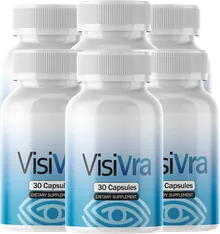
Best Visivra price today: 6 bottles at $49 each (save $780) or 3 bottles at $69 each with free US shipping. One-time payment, no autoship, 60 days to decide.
Check Today’s Discount ›What does not tell you about UV protection
- Darkness. A dark lens with no UV filter can be worse than no lens, because your pupils open wider behind it. Always rely on the UV rating.
- Price. Plenty of inexpensive pairs carry a proper UV rating; plenty of expensive fashion pairs don’t say.
- Polarization. It cuts glare from water and roads, which is nice, but it’s a separate feature from UV blocking.
- Blue-light claims. They’re a separate question (screens and blue light).
If you can’t tell from the tag, an optician can usually check the UV transmission of a pair you already own.
When to wear them
- Outdoors in daylight, including cloudy days and winter.
- Near snow, sand and water, which reflect more light.
- While driving, since low winter sun is a hazard too.
- After dilating drops at the eye doctor.
Add a hat, and think about kids
NEI’s advice for protecting against cataracts specifically mentions sunglasses and a hat with a brim (NEI). Children often spend long hours outdoors, so a UV-rated pair and a hat are worth the effort.
If you already have light sensitivity
If bright light has started to bother you, sunglasses help with comfort, but a new or worsening sensitivity should be checked (light sensitivity causes). Cataracts, dry eye and migraine can all play a role.
A 60-second fit test in the shop
- Put them on and look straight ahead: can you see the edges of the frame?
- Turn your head: does light leak in at the sides?
- Look at a straight edge, such as a door frame, and move your head slightly: does it wobble or bend?
- Check the label for the UV rating before you check the price.
Everyday situations
| Situation | Tip |
|---|---|
| Driving | Keep a pair in the car; low sun in winter is a hazard |
| Beach, boat, snow | Wraparound pairs and a hat; reflected light adds to exposure |
| If you wear glasses | Prescription sunglasses, clip-ons or lenses with UV protection; ask your optician |
| After a dilated exam | Bring sunglasses; your eyes will be light sensitive for a few hours (NEI) |
Questions
Do clear glasses protect against UV?
Some lenses and coatings include UV protection and others don’t. Ask your optician what yours do.
Are expensive sunglasses worth it?
Pay for a proper UV rating, a comfortable fit and good optics. Brand and price on their own tell you little.
How long do sunglasses last?
Replace them if lenses are scratched, loose or the coating is damaged, since scratches distort vision and may reduce effectiveness.
Sunglasses and supplements
Lutein and zeaxanthin collect in the macula and filter blue light inside the eye (macular pigment), but they don’t replace UV protection from outside. Think of it as two layers. If you want the nutrition layer too, Visivra is the formula this site covers (affiliate link). If you’re deciding where the first dollar goes, buy the sunglasses.
FAQ
What should I look for in sunglasses to protect my eyes?
A label saying they block 99 to 100 percent of UVA and UVB, plus a close fit or wraparound shape.
Are darker lenses better for UV protection?
No. Tint is about brightness. UV protection comes from a coating or material that must be labeled.
Do I need sunglasses in winter?
Yes. UV exposure is year-round, and snow reflects extra light.
Do polarized lenses protect against UV?
Polarization reduces glare and is separate from UV protection, so check the UV label either way.
Sources
- National Eye Institute (NIH): Keep your eyes healthy
- MedlinePlus (NIH): Eyewear
- National Eye Institute (NIH): Cataracts
- National Eye Institute (NIH): Get a dilated eye exam
General information, not medical advice. Prices and product details come from the official Visivra order page and bottle, checked November 6, 2026; the checkout page and the label on your bottle take priority. Read our disclaimer.