The question everyone with a screen job asks
Should you spend money on blue-light glasses, an eye supplement, or neither? The answer depends on what you’re trying to fix: eye strain, sleep, or long-term macular health.
What blue-light glasses do and don’t do
Blue-light glasses filter part of the blue wavelengths from screens. The American Academy of Ophthalmology states that the blue light from screens hasn’t been shown to harm the eyes and does not recommend blue-light glasses; digital eye strain comes from how we use screens: long focus, fewer blinks, glare (AAO). Some people still like the warmer tint, and evening blue light can affect sleep, which night mode handles for free.
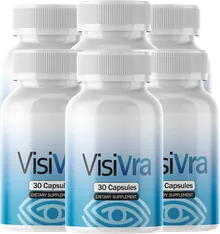
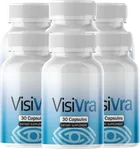
Best Visivra price today: 6 bottles at $49 each (save $780) or 3 bottles at $69 each with free US shipping. One-time payment, no autoship, 60 days to decide.
Check Today’s Discount ›What eye vitamins do
Lutein and zeaxanthin collect in the macula as macular pigment, which absorbs blue light inside the eye and acts as an antioxidant (macular pigment). In a 6-month trial of young adults with high screen use, raising macular carotenoids improved visual performance and reduced eye strain, fatigue and headaches compared with placebo (PubMed). Bilberry and astaxanthin have smaller trials for eye fatigue (PubMed; PubMed).
Head to head
| Blue-light glasses | Eye vitamins (lutein + zeaxanthin) | |
|---|---|---|
| How it works | Filters light before it reaches the eye | Builds a filter and antioxidant layer inside the eye |
| Evidence for eye strain | Weak; AAO doesn’t recommend | Positive trial in heavy screen users |
| Other benefits | May help if you like the tint | Macular pigment for long-term eye health (NEI) |
| Works everywhere? | Only when worn | All day, all light sources |
| Speed | Immediate (if it helps) | Weeks to months |
| Cost | One-time | Ongoing, from about $1.63 a day for Visivra |
What helps eye strain most (free)
- The 20-20-20 rule (CDC).
- Blinking fully and often.
- Screen an arm’s length away, slightly below eye level.
- Reduce glare and match brightness to the room.
- An up-to-date glasses prescription, including computer glasses if your eye doctor suggests them.
More in eye strain from your phone and tired eyes remedies.
What about sleep?
Bright screens late at night can delay sleep. Night mode, lower brightness and putting the phone away an hour before bed work without special glasses.
How to test blue-light glasses fairly if you want to try
- Rate your end-of-day eye tiredness for a week without them.
- Wear them for the next week, changing nothing else.
- Compare your ratings.
If you feel a clear benefit, that is a perfectly good reason to keep wearing them, even though trials have not shown consistent benefits (AAO). Just don’t expect them to protect the macula.
What actually protects the macula
- Not smoking.
- Eating leafy greens and fish (NEI).
- Sunglasses outdoors that block 99–100% of UVA and UVB.
- Dilated eye exams (NEI).
- Lutein and zeaxanthin from food or supplements (why the pair matters).
Common questions
Do I need computer glasses?
Computer glasses are different from blue-light glasses. They are prescription lenses tuned for screen distance and can help people over 40 who strain to focus. Ask your eye doctor.
Is blue light good for anything?
Yes. Daytime blue light helps set your body clock and mood. Evening exposure is what can interfere with sleep.
Can sunglasses substitute?
Sunglasses reduce outdoor glare and UV, which matters for long-term eye health, but they aren’t meant for indoor screen use.
Do eye vitamins make sunglasses unnecessary?
No. Use both. Sunglasses protect against UV; nutrients support the retina from inside.
Our recommendation
- Skip blue-light glasses unless you simply like them.
- Fix your habits first: they give the fastest relief.
- Add lutein and zeaxanthin if you spend long days on screens or eat few leafy greens; see Visivra and blue light.
Visivra combines lutein and zeaxanthin with bilberry and astaxanthin in one daily capsule, with a 60-day money-back guarantee. Check Visivra’s price.
FAQ
Do blue light glasses work?
The AAO doesn’t recommend them, as screen blue light isn’t shown to damage eyes and evidence for easing strain is weak.
Can vitamins filter blue light?
Lutein and zeaxanthin build macular pigment, which absorbs blue light inside the eye.
Which is better for computer eye strain?
Breaks and blinking first. Among products, lutein and zeaxanthin have a positive trial in heavy screen users.
Can I use both?
Yes. They don’t conflict, though most people don’t need blue-light glasses.
Sources
- American Academy of Ophthalmology: Should you be worried about blue light?
- PubMed: Macular carotenoid supplementation improves visual performance, sleep quality and physical symptoms in people with high screen time (Foods, 2017)
- PubMed: 12 weeks of bilberry extract and ciliary-muscle findings in visual display terminal workers (Nutrients, 2020)
- PubMed: Anthocyanin, astaxanthin and lutein on eye functions, a randomized placebo-controlled study (J Clin Biochem Nutr, 2021)
- National Eye Institute (NIH): AREDS/AREDS2 clinical trials
- CDC: Preventing vision loss
- National Eye Institute (NIH): Keep your eyes healthy
- National Eye Institute (NIH): Get a dilated eye exam
General information, not medical advice. Prices and product details come from the official Visivra order page and bottle, checked November 6, 2026; the checkout page and the label on your bottle take priority. Read our disclaimer.