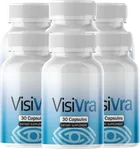
The pros
| Pro | Why it matters |
|---|---|
| Lutein + zeaxanthin | The carotenoids NIH chose for the AREDS2 eye formula (NEI) |
| Bilberry + astaxanthin | Antioxidants studied in people who use their eyes hard all day (PubMed; PubMed) |
| Zinc + vitamin A | Nutrients your retina needs for low-light vision (NIH ODS) |
| One capsule a day | Easy to remember, unlike drops every few hours |
| One-time payment | No autoship, no surprise charges |
| 60-day guarantee | Time to judge it properly with your money protected |
The things to know
- It takes weeks. Macular pigment builds gradually. Plan on 8–12 weeks; see Visivra results after 30 days.
- No mg amounts online. The order page names the six ingredients but not milligrams per capsule. The bottle label is the place to check.
- Shipping on 2 bottles. The smallest pack adds $19.99; 3 and 6 bottles ship free in the US. See Visivra free shipping.
- Online only. The official guarantee applies to orders from the official order page.
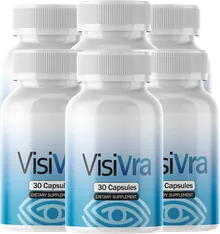
Best Visivra price today: 6 bottles at $49 each (save $780) or 3 bottles at $69 each with free US shipping. One-time payment, no autoship, 60 days to decide.
Check Today’s Discount ›Who gets the most from it
Heavy screen users, adults over 40, night drivers and anyone who rarely eats leafy greens. It is not for children and it is not a treatment for eye disease, so keep your regular eye exams (NEI). See Visivra for women over 50 and Visivra for gamers.
Pros and cons by type of buyer
A pro for one person can be a con for another. Here is how Visivra looks from five common points of view.
| Buyer | Biggest pro | What to watch |
|---|---|---|
| Office or remote worker | Nutrients studied in screen users (PubMed; PubMed) | Still take 20-20-20 breaks |
| Adult over 50 | Lutein and zeaxanthin for the macula, vitamin A for low light | Not a replacement for an AREDS2 formula if you have AMD |
| Night driver | Vitamin A and zinc for the rhodopsin cycle | Rising glare can be a cataract; get checked |
| Budget-minded buyer | About $1.63 a day on the 6-pack | 2-bottle pack costs more per day |
| Supplement skeptic | 60-day money-back guarantee | Needs consistent daily use to judge fairly |
The pros in more depth
Ingredient choice. The strongest single piece of evidence in eye nutrition is NIH’s AREDS2 trial, and lutein and zeaxanthin came out of it as the preferred carotenoids (PubMed). Visivra builds on that pair rather than on exotic herbs. Bilberry and astaxanthin then add antioxidant support that has been tested in people who use their eyes hard all day (PubMed).
Simplicity. One capsule a day is the easiest routine there is. Compliance matters more than people think: a perfect formula taken three days a week will lose to a good formula taken every day.
Buying terms. The price is clear before checkout, payment is one-time, and the refund window is long enough to complete a real test. Read the steps in how to get a Visivra refund.
The cons in more depth, and how to neutralise each one
- “It took a while.” That is how eye nutrients work. Plan for 90 days and track a weekly score. See how long it takes.
- “I couldn’t find the mg amounts online.” Check the bottle’s Supplement Facts panel and keep total vitamin A and zinc within NIH limits.
- “Shipping on the small pack.” The 3-bottle package is only $29 more than the 2-bottle package once shipping is added, and gives you an extra month.
- “It didn’t fix my blurry vision.” Blur from an old prescription or a cataract needs an eye doctor, not a supplement (NEI; NEI).
What we would tell a friend
If your eyes feel worn out by screens, if you rarely eat leafy greens, or if you are over 40 and want to look after your macula, Visivra is a sensible, low-effort daily step with a fair guarantee. Pair it with regular dilated eye exams, sunglasses outdoors and a few servings of greens a week (NEI). If you have a diagnosed eye disease, talk to your eye doctor first and read Visivra and macular degeneration.
Reader questions about the pros and cons
Is one capsule a day really enough?
For a daily eye formula, yes. The goal is steady intake over months, not a big dose on one day. Research on lutein, zeaxanthin and bilberry used daily servings for 12 weeks to 6 months (PubMed; PubMed). Follow the serving on your bottle’s label.
Would I be better off with a cheaper single-ingredient product?
If you only want lutein, maybe. If you want the macular carotenoids plus antioxidant support for screen-heavy days and vitamin A for low light, you would need several bottles to match. See Visivra vs plain lutein.
Do the pros outweigh the cons?
For most people, yes. None of the “cons” is a safety or quality problem; they are about patience and package choice. Pick 3 or 6 bottles to cover the full 90-day window and the main drawbacks disappear. Check Visivra prices now.
FAQ
What is the biggest advantage of Visivra?
It combines six of the most researched eye nutrients in one daily capsule, with a 60-day money-back guarantee.
What is the main downside of Visivra?
Patience: macular pigment builds over weeks, so most people need 2–3 months of daily use to judge it.
Does Visivra have side effects?
Its nutrients are found in food and are generally well tolerated at label doses. Avoid stacking extra vitamin A or zinc. See lutein side effects.
Sources
- National Eye Institute (NIH): AREDS/AREDS2 clinical trials
- PubMed: 12 weeks of bilberry extract and ciliary-muscle findings in visual display terminal workers (Nutrients, 2020)
- PubMed: Anthocyanin, astaxanthin and lutein on eye functions, a randomized placebo-controlled study (J Clin Biochem Nutr, 2021)
- NIH Office of Dietary Supplements: Vitamin A and carotenoids
- National Eye Institute (NIH): Get a dilated eye exam
- PubMed: Macular carotenoid supplementation improves visual performance, sleep quality and physical symptoms in people with high screen time (Foods, 2017)
- PubMed: Lutein + zeaxanthin and omega-3 fatty acids for AMD, the AREDS2 randomized trial (JAMA, 2013)
- National Eye Institute (NIH): Refractive errors
- National Eye Institute (NIH): Cataracts
- National Eye Institute (NIH): Keep your eyes healthy
General information, not medical advice. Prices and product details come from the official Visivra order page and bottle, checked November 6, 2026; the checkout page and the label on your bottle take priority. Read our disclaimer.